Doo-wop, rockabilly and the girl groups: a listener's guide to the 50s and 60s
Two decades, a dozen sounds. Here is what sets doo-wop apart from rockabilly, where Motown came from, and why the British Invasion changed everything in 1964.
2 min read
People say "the oldies" as if it were one kind of music. It never was. The twenty years from 1950 to 1969 packed in more new sounds than most decades since, and each one had its own crowd, its own dances and its own records worn thin on the turntable. Here's a short guide to the ones you'll hear on the show.
Rock 'n' roll
Rhythm and blues, country and gospel all went into it, and by the middle of the 50s it had a name. Pounding piano, a saxophone break, a guitar turned up loud, and a beat you could not sit still to. Parents worried. Teenagers did not.
Doo-wop
Doo-wop was born on street corners and in school hallways, in cities like New York, Philadelphia and Baltimore. Four or five voices, often with little more behind them: a deep bass at the bottom, a high falsetto floating over the top, and the "doo-wop" and "sha-na-na" sounds that gave it its name. Many groups made one great record and were never heard from again, which is why doo-wop is full of one-hit wonders worth hearing again.
Rockabilly
Rockabilly came out of the South, Memphis above all, when young country singers started playing rhythm and blues. Listen for the slap of an upright bass, a twangy electric guitar with a lot of echo, and a hiccup in the singer's voice.
The girl groups
At the start of the 60s, groups of young women singing songs about crushes, heartbreak and the boy down the street filled the charts. Behind them were teams of songwriters and producers who built huge records, strings, castanets and all. The choruses were made for singing into a hairbrush.
Motown and soul
In 1959 Berry Gordy started a record company in Detroit, and before long Motown was calling itself "the sound of young America". Tight rhythm sections, tambourines on every beat, and singers and groups who were coached on how to dress and move as well as sing. Soul from Memphis and elsewhere ran alongside it, a little rawer.
Surf music
From Southern California came reverb-drenched guitar instrumentals and close harmonies about cars, girls and waves. You didn't have to live near a beach to love it.
The British Invasion
In February 1964 the Beatles played on The Ed Sullivan Show, and American radio was never the same. Band after band crossed the Atlantic, many of them playing their own take on the American rhythm and blues they had grown up on.
And the B-sides
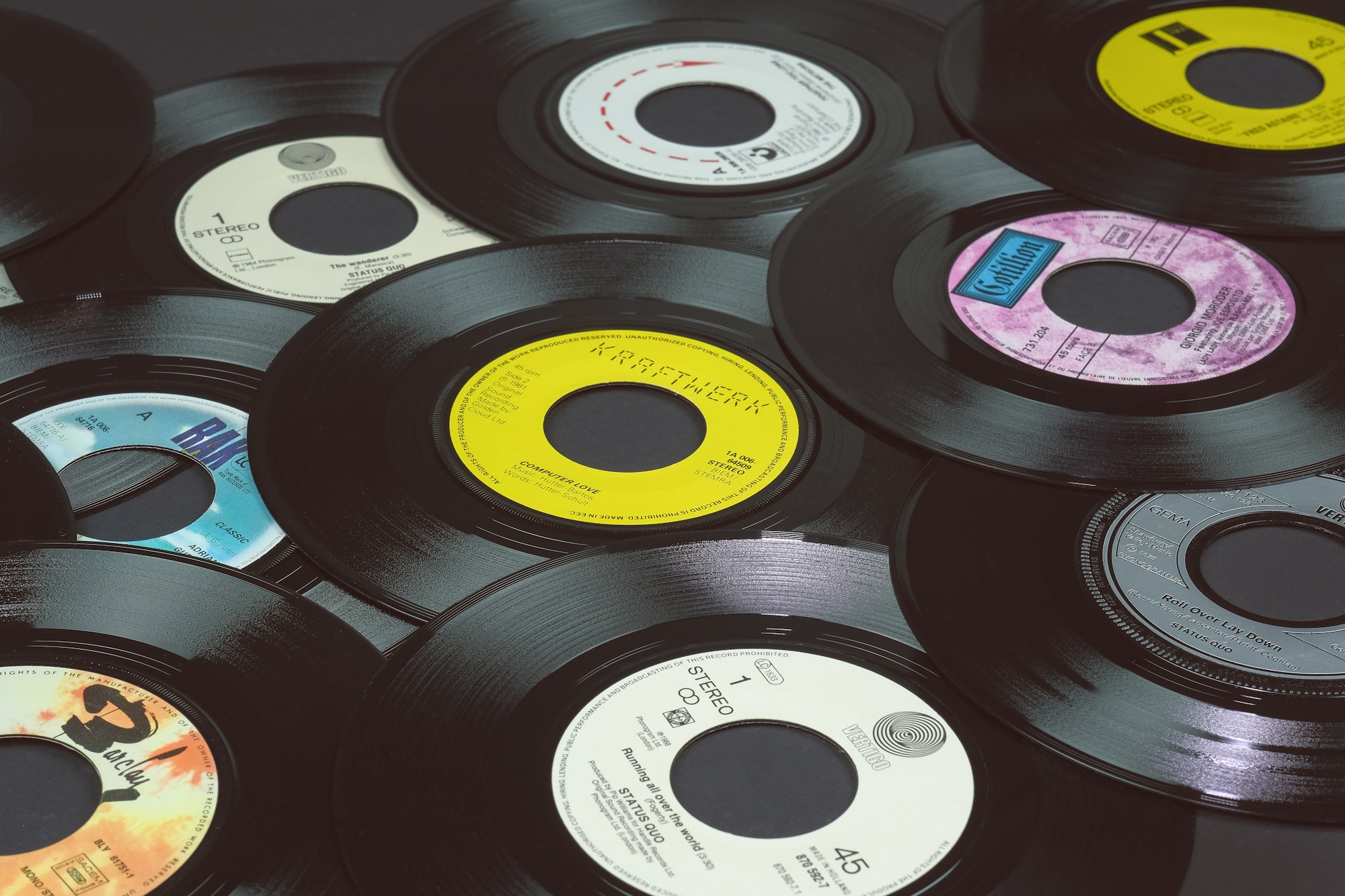
Every 45 had two sides, and plenty of B-sides were as good as the hit, or better. They are a big part of why an oldies show doesn't have to play the same two hundred songs on repeat.
“Every 45 had two sides, and plenty of B-sides were as good as the hit.”